Piano Methods Then and Now
A few thoughts on the method debate.

The merits of different methods is a popular topic of conversation on social media. Most teachers have their favorite, and there are quite a few to choose from. Current favorites include Piano Adventures and Alfred Premiere, both of which owe a debt to earlier American methods like Thompson and Bastien. A couple of newcomers, namely Piano Pronto and Piano Safari, also have devoted followings. Their approaches are different. Piano Pronto was designed around traditional folk tunes and classical melodies that students and teachers may already be familiar with. Piano Safari was designed around a rote approach that builds familiarity with aural and technical patterns, enabling a solid foundation in reading.
One of my favorite definitions of pedagogy was given by Randall Faber in a workshop I attended years ago. I can’t remember his exact words, but his message was that pedagogy is helping students gain a familiarity and understanding of patterns - in the ear, in the hand, and on the page. This is the thread that binds all piano methods together; they may vary in terms of repertoire and sequence, but they all serve as a guidebook to mastering those patterns.
I reached this conclusion after digging around in some 19th century methods on IMSLP. One that I’ve long been interested in is Louis Kohler’s “Practical Method for the Pianoforte” Op. 249. Following the tried-and true format of other 19th century methods, it begins with a number of diagrams naming the notes, intervals, accidentals, and rhythmic values.
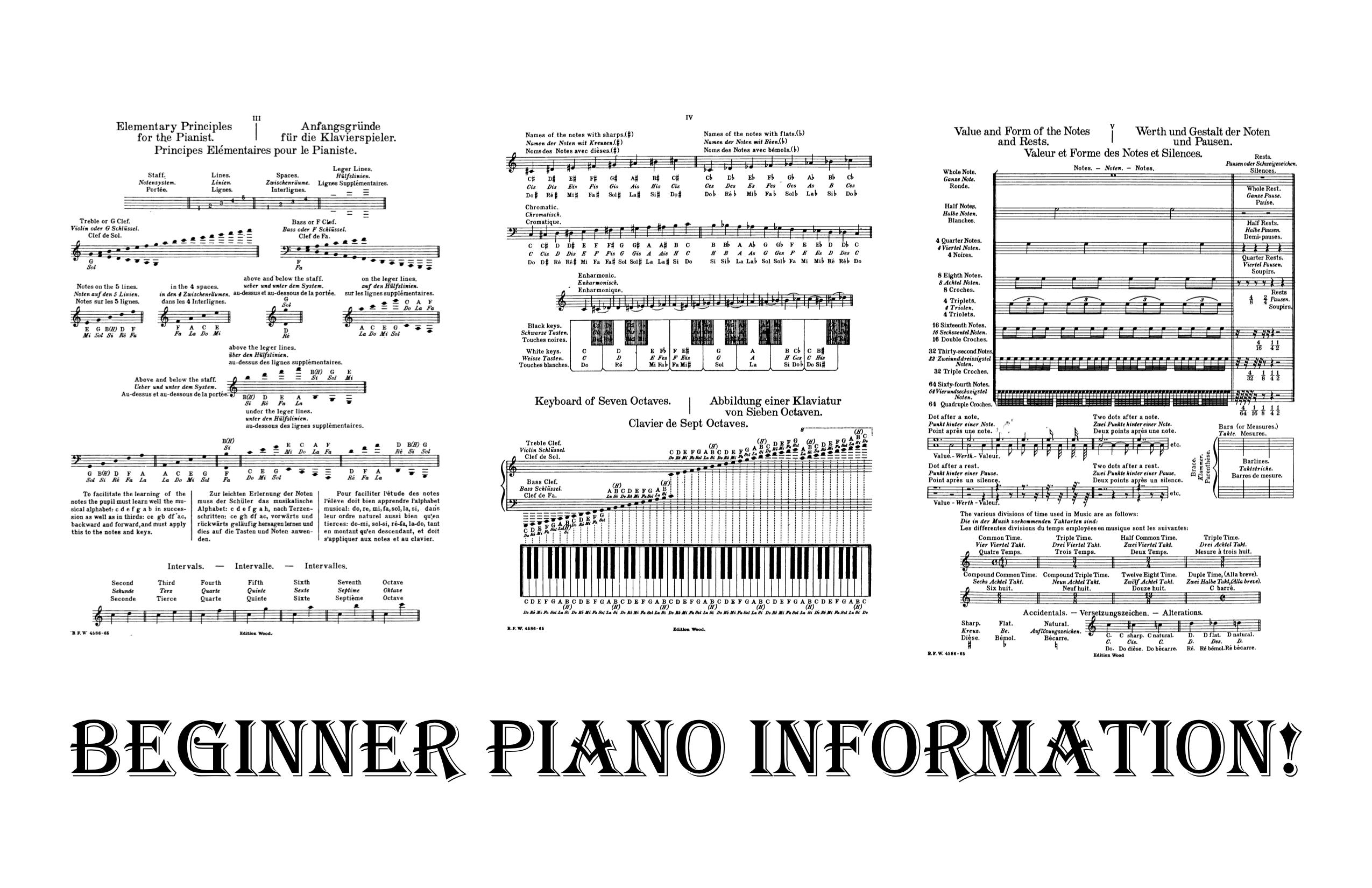
The opening pages are a deluge of information, and they’re immediately followed by a series of 5-finger exercises to be played with either hand. By the fifth page, both hands are playing 2-part counterpoint. The first piece is on the following page, a waltz for both hands with the melody in the RH and harmonic interval accompaniment in the LH.
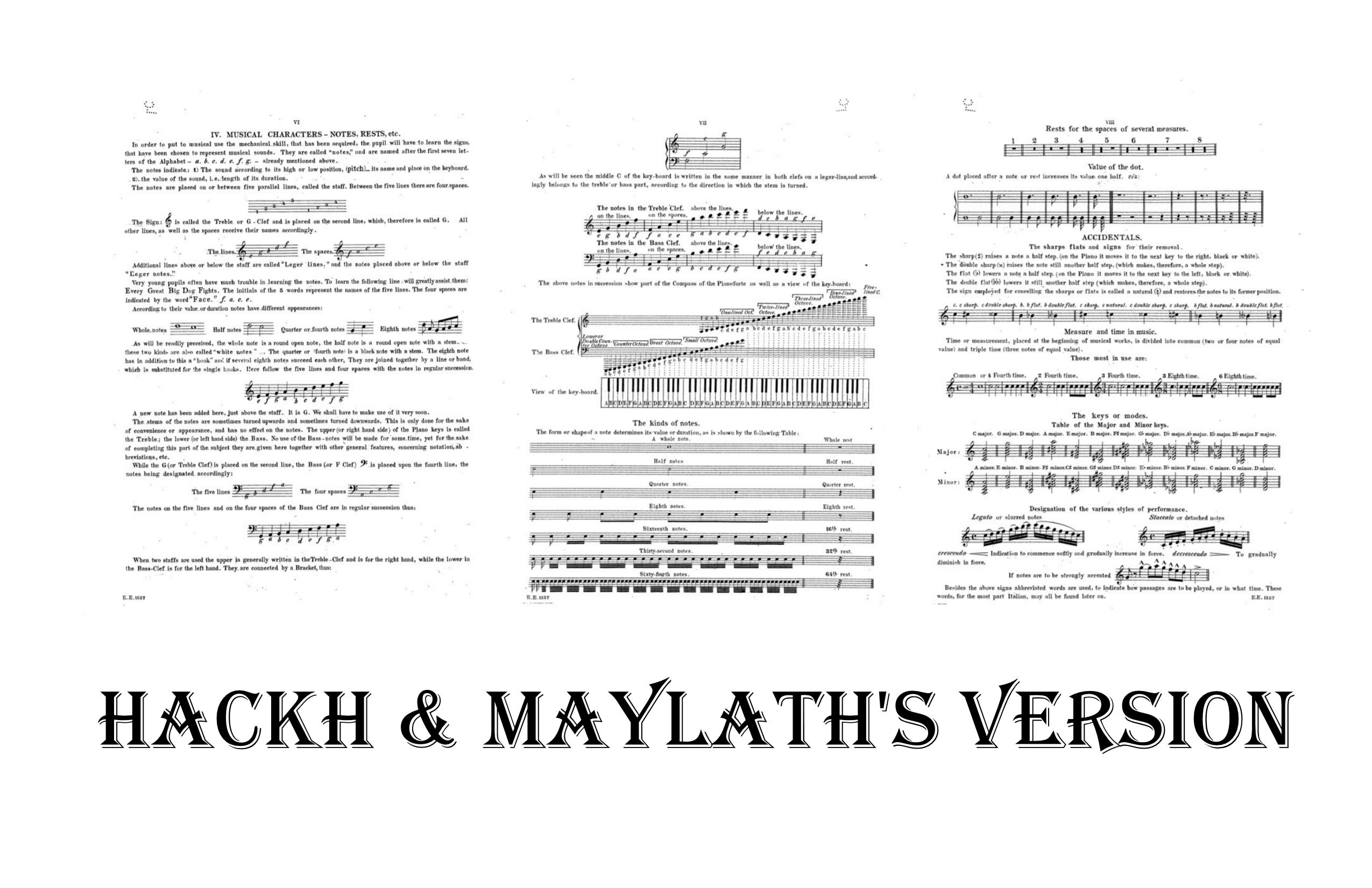
By modern standards, the Kohler method feels rushed, and yet it does exemplify the standard format for 19th century publications. Hummel (1827) includes four pages of exercises and three pages of counterpoint before launching into hands-together scales and arpeggios. Mansour (1867) has a similar approach. The introductory pages in the Eberhard method by Hackh and Maylath (1875) have one wondering if all of the method authors in the 19th century were simply copying each other.
All of this had me wondering about the pros and cons of historical methods versus their modern counterparts. At first, I thought the comprehensive skill-building exercises of the historical methods belonged in the “pro” column, but in doing so, do they cover a lot of unnecessary ground? And what about the discipline required to practice many pages of exercises before playing a single piece? Does that belong in the pro column? (Discipline is good!) Or does it amount to drudgery? The one pro that I decided historical methods had was that of stylistic authenticity. They focus on scales, arpeggios, and basic counterpoint - the material necessary to play the popular classical music of the day. There was no attempt to be diverse, as the goal was to prepare students to embark on a journey that began with sonatinas and ended with Chopin and Liszt. (Interestingly enough, Beyer is still a popular method among some, and the pianists I’ve met who trained on Beyer have become excellent performers of the traditional classical canon.)
Modern methods have a very different list of pros and cons. The first con that comes to mind is the opposite of what I just mentioned - that in an effort to be stylistically diverse, we often get a folk song, some kind of pop tune, a blues tune, the ubiquitous Spanish piece with the Am-G-F-E chord progression, a lead sheet, and maybe a classical piece or two. This is why I rarely go past level 2 or 3 in a method book. I find that students want to focus on a particular style once they’ve got the basics. Put simply, a student dutifully following a modern method may risk being a jack of all trades, but a master of none. (But is that a pro or a con? I imagine there are a lot of opinions on this and I can think of arguments to support both sides.)
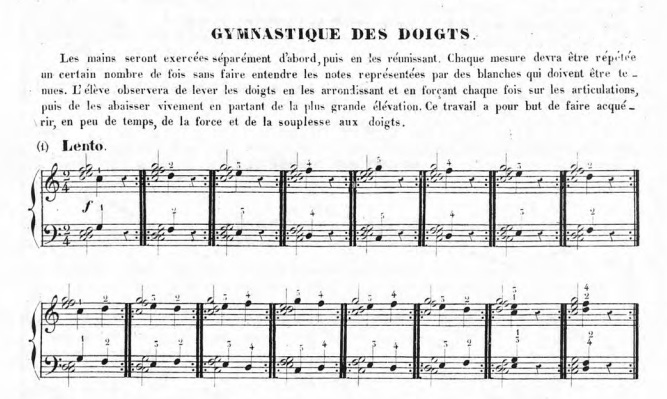
The pros for modern methods are more numerous. We’ve learned a lot about pedagogy in the last hundred years, and while it’s still all about patterns, we’re much better at presenting and organizing the information. Our understanding of technique has also grown by leaps and bounds, and we’ve learned that some of what those early methods asked us to do can be a recipe for injury instead of success. This kind of held-note exercise from Mansour’s method (c. 1867) is not uncommon:
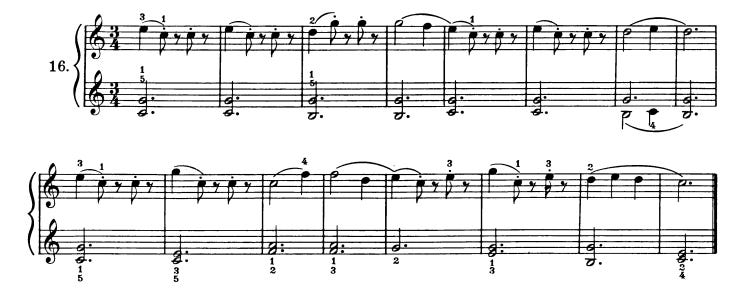
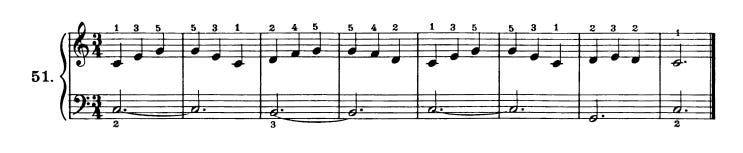
I also find the music in modern methods more enjoyable. My students have a difficult time being motivated by rather generic pieces in C Major. Sorry Mr. Kohler, but this is not, as my students would say, a “banger”:
That’s not to say there aren’t wonderful pieces of music in these early methods. In my online explorations, I came across a French method by Adeline Charpentier published in 1875 by Firmin-Didot in Paris. Her method is very similar to other 19th century offerings, but I did find a rather interesting note in her introduction. She writes:
“Piano lessons should only begin for a child once they can read and have a basic understanding of music. They must be able to fluently decipher notes in the treble and bass clefs, understand their different values, and be able to play music in time. The study of music itself should therefore precede the study of the instrument by six months to a year. Attempting to combine them into a single, unified study would throw the student into too many difficulties, tiring their attention, slowing their progress, and ultimately leading to boredom and disillusionment. It is therefore preferable to only place their fingers on a piano once they can read the notes of the exercises before them without hesitation; this will allow them to focus more specifically on hand position and everything related to the instrument’s mechanism.”
I found that a fascinating window into historical methods. Unlike many modern methods, they were never meant to be comprehensive. It was assumed that students would have a wealth of experience with music and its notation before tackling the keyboard. Perhaps that’s the true recipe for success. (It certainly was for me, I was never a prodigious pianist, but I did benefit from a wealth of experience at church and from excellent public school music teachers.)
Perhaps my favorite discovery from browsing through historical methods was this, one of Adeline Charpentier’s pieces, the second from Lesson #8. I’ve never seen it anthologized, but it is rather charming and deserves a place in the early classical teaching repertoire. You can click the image below to download the piece in its entirety.
